
Know What’s Live Before You Touch It
What if the tool you trust to keep you safe from hidden hazards is actually giving you a false sense of security?
In my years working with safety systems across the United States, I’ve seen how the right testing tool makes all the difference. It’s not just about having a device; it’s about having a reliable partner for every job in your home or workplace.

Choosing the correct device is a critical decision. A poor choice can lead to missed faults, wasted energy, or even dangerous situations. My hands-on experience has taught me that the best tools combine precision, durability, and intuitive design.
This guide draws from that expertise. I’ll walk you through a comprehensive review of top-performing safety devices. You’ll learn what features truly matter and how to select the perfect tool for your specific needs.
CLICK HERE for Amazon’s Range of Best-Selling Electric and Voltage Detectors
Key Takeaways
- The right detector is essential for preventing accidents and improving operational efficiency.
- Not all electronic sensors are created equal; accuracy and reliability vary greatly by brand and model.
- Professional-grade tools offer superior durability and precision for critical tasks.
- Regular calibration and proper use are non-negotiable for maintaining accurate readings.
- Understanding your voltage and application requirements is the first step to a smart purchase.
- Investing in a quality tool upfront saves money and enhances safety in the long run.
- This guide provides hands-on, tested recommendations to inform your decision.
What Are Electrical Detectors?
Electrical detectors are key to keeping us safe from hidden dangers. They help find live wires and check for voltage. This makes sure circuits are safe before we touch them.
They act like special senses for electricity. When our eyes and ears can’t help, detectors give us clear signals. This helps avoid shocks, fires, and damage to equipment.
Definition and Purpose
An electrical detector is a handheld tool that finds or measures electrical properties. It mainly looks for voltage, the force that moves electrical current. Its main goal is safety through identification.
It does two main things. First, it tells if a wire is live with electricity. Second, it checks if a circuit is complete. Without it, we work in the dark.
For example, before fixing a light switch, I always check with a voltage tester. This quick step is what keeps repairs safe. It’s not just about finding electricity; it’s about making sure it’s not there where we need to work.
“The best electrical detector is the one you trust enough to use every single time.”
Different Types of Electrical Detectors
There are many types of detectors, each for different needs. Knowing which one to use is crucial for safety and efficiency.
Non-Contact Voltage Testers (NCVT): These are easy to use and very common voltage testers. Just hold the tip near a wire or outlet, and it lights up or beeps if there’s voltage. I always carry one for quick checks. They’re safe because you don’t have to touch metal.
Contact Voltage Detectors: These need direct contact with a conductor. They give a clear reading of voltage and are reliable. Many pros prefer them for their toughness.
Multimeters: These are like all-in-one tools. They measure voltage, current, resistance, and continuity. While not just detectors, their testing features are vital for detailed checks.
Circuit Testers and Receptacle Analyzers: These plug into outlets to find wiring problems. They check if an outlet is wired right, grounded, or has the wrong polarity.
Wire Detectors and Tracers: These find wires hidden behind walls or underground. A transmitter sends a signal, and a receiver picks it up. I’ve used them to find buried cables before digging, avoiding costly and dangerous mistakes.
Choosing the right tool depends on the job. A homeowner might only need a non-contact tester. But an electrician needs a full set, including a multimeter and tracer. The goal is to match the tool to the task for safety and accuracy.
Importance of Using Electrical Detectors
I’ve seen how a simple tool can save a home from disaster. Last year, while installing a ceiling fan, my voltage detector beeped wildly. It warned me about a live wire I thought was dead. This experience showed me how vital these devices are for our safety.
Electrical problems are hard to see. You can’t spot overloaded circuits or bad insulation. Without a detector, you’re working in the dark. These tools are key for everyone, not just electricians. They help us make safe choices about our electrical systems.
Enhancing Safety at Home
My goal at home is to keep my family safe. Electrical detectors are key to that. They turn guesses into facts. For example, a non-contact voltage tester tells you if a wire is live before you touch it.
More advanced tools, like current meters, take safety further. I use them to check how much electricity is flowing. This helps find overloads that can cause wires to heat up silently.
Here are key ways detectors improve home safety:
- Identifying Faulty Wiring: Old, damaged, or bad wiring is a fire risk. Detectors find these hidden problems.
- Verifying Power is Off: Always check with a detector before starting electrical work, even after turning off the breaker.
- Locating Circuits: Circuit finders help you map your home’s electrical panel. You’ll know which breaker controls each outlet.
- Preventing Appliance Damage: Checking voltage with a multimeter protects expensive electronics from power surges.
| Safety Scenario | Without an Electrical Detector | With Electrical Detector |
|---|---|---|
| Installing a Light Fixture | Relying on the circuit breaker label, risk of shock if the label is wrong. | Using a voltage tester to confirm wires are dead, work proceeds with confidence. |
| Tripping Breaker | Guessing which appliances are on the overloaded circuit; repeated trips. | Using a current meter to measure load and redistribute appliances logically. |
| Finding a Dead Outlet | Assuming a bad outlet and replacing it unnecessarily. | Use a circuit finder and a multimeter to diagnose a tripped GFCI or a loose wire upstream. |
CLICK HERE for Amazon’s Range of Best-Selling Electric and Voltage Detectors
Preventing Electrical Hazards
Prevention is better than reaction with electricity. Detectors are all about preventing hazards. Electrical fires often start from arcs, sparks, or overheated wires inside walls. By the time you see smoke, a lot of damage has already happened.
I once used a circuit finder to find a low-level ground fault. It was a tiny nick in a wire in a basement junction box. Fixing it stopped a potential shock hazard and future breaker trips. This is what prevention is all about—fixing small issues before they become big problems.
Detectors prevent many hazards, including:
- Electrical Fires: Caused by overloaded circuits, faulty connections, and arcing.
- Severe Shock or Electrocution: From touching live wires during maintenance or repair.
- Equipment Failure: Appliances and electronics damaged by the wrong voltage or power surges.
- Costly Repairs: Extensive damage from fires or faults that could have been caught early.
Buying a few key detectors is a smart investment in safety and peace of mind. They let you understand and manage the invisible electrical currents that power your life. The cost of these tools is small compared to the value of preventing an accident.
Key Features to Look For
Not all electrical inspection tools are the same. Their features show how reliable and valuable they are. The right mix makes a simple tool a trusted safety partner.
Don’t just look at the brand name. Check the engineering and design too. Three key things matter: sensitivity, interface, and durability.
Sensitivity and Accuracy
These two are the heart of any detector. Sensitivity shows how well it finds small voltages or currents. A good one finds weak signals in walls or old wiring.
Accuracy means the readings are true. A false reading is dangerous. The best tools give precise, reliable results.
For outlet testers and voltage detectors, check the specs. They should list the detection range and tolerance. A vague description might hide poor performance.
User-Friendly Interface
A tool is useless if you can’t use it. The interface includes the display, controls, and feedback. It should be clear.
I like tools with bright, backlit screens or large LED indicators. Audible alerts should be clear, not just a beep. Some tools use different beeps for AC and DC voltage.
One-button operation is best for homeowners. Professionals might need more, but it should be easy to use. A confusing interface can lead to mistakes during important tests.
Durability and Build Quality
Your detector will be in a toolbox, dropped, and exposed to dust and moisture. Its build affects how long it lasts. A cheap plastic case is a warning sign.
Look for strong housing, like ABS plastic or rubber-over-molded composites. These protect the electronics inside. The probe tips should also be tough and not bend easily.
Quality outlet testers have strong, well-insulated plugs. A detector is a long-term investment. Good build quality means it lasts for years.
| Key Feature | DIY Homeowner Priority | Electrician Priority | Why It Matters |
|---|---|---|---|
| Sensitivity & Accuracy | High | Critical | Ensures reliable detection of live wires and correct wiring faults; prevents accidents. |
| User-Friendly Interface | Critical | High | Reduces learning curve and mistakes; enables quick, confident readings for all skill levels. |
| Durability & Build | Medium | Critical | Withstands rough handling on job sites; ensures tool longevity and consistent performance. |
| Audible/Visual Alerts | High | Medium | Provides clear, immediate feedback in noisy or visually busy environments. |
| Battery Life | Medium | High | Minimizes downtime; essential for professionals using tools throughout the day. |
Use this table to decide what’s most important for you. A homeowner might want a simple, accurate tester. A pro needs a tough, feature-rich multimeter for daily use.
Remember, the best features work together. High sensitivity is useless if the tool breaks easily. A strong body is pointless if it can’t give reliable readings. Look at electrical inspection tools as a whole system.
Popular Types of Electrical Detectors
In my toolbox, three main electrical detectors are key for safety and accuracy. Each tool has a special job. Knowing which one to use can make your work easier and avoid mistakes. I always know what each tool can do, from simple checks to complex circuit tests.
Voltage Detectors
For a quick check of live wires, I use a voltage detector. These tools are simple to use. Just hold them near a wire or outlet, and they light up or beep if there’s voltage.
These devices are fast and safe. You don’t have to touch wires. They’re great for simple tasks like checking outlets before changing switches. But, they only show if there’s voltage, not how much.
I think non-contact voltage testers are a must for DIYers starting electrical work.
CLICK HERE for Amazon’s Range of Best-Selling Electric and Voltage Detectors
Circuit Testers
For tracing wiring and checking connections, I use circuit testers. They’re more hands-on than voltage detectors. A basic outlet tester, for example, plugs into a receptacle and shows wiring faults with lights.
Another important tool is the continuity tester. It checks if a circuit is complete by sending a small current. I use it to see if a fuse is blown or a wire is broken.
- Outlet Testers: Quickly find wiring errors in outlets.
- Continuity Testers: Check if wires and components are connected.
- GFCI Testers: Check Ground Fault Circuit Interrupter outlets.
While not as flexible as a multimeter, a good circuit tester gives clear answers for specific problems.
Multimeters
For detailed data, my multimeter is the go-to. It’s the most versatile tool in my kit. It measures voltage, resistance, and continuity. It’s also a precise current meter when used correctly.
A multimeter’s ability to show exact values is unique. It tells you not just if a wire is live, but how much voltage it has. It helps you figure out if a component is bad by measuring its resistance.
Here’s what a standard digital multimeter can do:
- Voltage: Measures electrical potential precisely.
- Current (Amperage): Checks the flow of electricity, key for device testing.
- Resistance (Ohms): Tests components like heaters and motors.
- Continuity: Beeps to show a complete circuit.
For serious electrical work, like car repairs or appliance fixes, a good multimeter is essential. It does the job of several simpler testers in one precise tool.
Best Brands for Electrical Detectors
In my years of testing safety equipment, I’ve found that brand reputation often predicts performance with electrical detectors. The right manufacturer combines rigorous engineering with a deep understanding of what electricians and homeowners need. While many companies make these tools, three brands have earned my unwavering trust through consistent quality and innovation.
My hands-on testing reveals clear leaders. Fluke sets the gold standard for precision, Klein Tools builds nearly indestructible gear, and Extech Instruments pushes the envelope with smart features. Choosing a detector from one of these brands is an investment in both safety and long-term value.
Fluke
When absolute accuracy is non-negotiable, I reach for my Fluke tools. Their reputation in the professional electrical world is unmatched. I’ve relied on Fluke voltage testers and multimeters in complex industrial panels where a false reading could cause catastrophic downtime.
The build quality feels premium, and the readings are instantly trustworthy. Fluke’s commitment to calibration and safety standards is evident in every product. For anyone whose work depends on flawless diagnostics, Fluke is the definitive choice.
“The difference between a good detector and a great one is the confidence it gives you. Fluke provides that confidence.”
Klein Tools
If you need a detector that can survive a job site, Klein Tools is your brand. I’ve dropped their circuit testers from ladders and used them in pouring rain, and they just keep working. The focus here is on rugged durability and intuitive design.
Their products often feature bright LED lights, loud audible alerts, and simple one-button operation. I recommend Klein Tools to contractors and serious DIYers who need a reliable, no-nonsense tool that won’t fail under pressure. You get professional-grade performance without an overly complex interface.
Extech Instruments
For those who love data and advanced features, Extech Instruments consistently impresses me. They specialize in integrating sophisticated electronic sensors into user-friendly packages. I’ve tested their models that log measurements, connect to apps, and detect a wider range of signals.
Extech is ideal for technicians, engineers, or tech-savvy homeowners who want more than just a basic presence indicator. Their innovative designs often include features like non-contact voltage detection with distance estimation, making them a leader in smart tool development.
To help you visualize the core differences, here’s a direct comparison of these top brands based on my evaluation:
| Brand | Key Strength | Best For | Notable Product Example | Typical Warranty |
|---|---|---|---|---|
| Fluke | Laboratory-grade precision & calibration | Professional electricians, engineers, and industrial users | Fluke T6-1000 PRO Electrical Tester | Lifetime |
| Klein Tools | Extreme durability & ergonomic design | Contractors, construction crews, heavy DIY | Klein Tools NCVT-3P Non-Contact Voltage Tester | 1 Year |
| Extech Instruments | Innovative features & sensor technology | Technicians, HVAC specialists, and advanced hobbyists | Extech EX330 Autoranging Multimeter | 2 Years |
Each brand carves out a distinct niche. Your choice ultimately depends on whether you prioritize Fluke’s pinpoint accuracy, Klein’s brute-force toughness, or Extech’s forward-thinking functionality. All three manufacturers manufacture exceptional electrical detectors that elevate safety and efficiency.
How to Choose the Right Electrical Detector
Finding the right electrical tool can be tough. I’ve tried many and found the best balance in three areas. You need a tool that fits your job, your budget, and offers real value.
Let’s make choosing easier with a simple guide. This will help you go from unsure to sure.
Assessing Your Needs
First, think about what you need the detector for. Do you just want to check wires for hanging pictures? Or do you need to trace circuits in a big panel? Your job will tell you what tool you need.
For simple home tasks, a non-contact voltage tester works well. It shows if a wire is live. For tracing circuits, you need a circuit finder. For detailed checks, a multimeter is best.
The right tool isn’t the one with the most features; it’s the one that solves your most frequent problem with the least fuss.
Think about where you’ll use it. Do you need something small for tight spots? Or something tough for outdoors? This helps narrow down your choices.
Budget Considerations
Your budget is important, but don’t skimp on safety. Cheap detectors often don’t work well and can be dangerous.
Set a budget range. For good wire detectors at home, spend $30 to $80. For pros, expect to pay $100 to over $300. See it as an investment in safety and work.
Ask if the tool will save you money by avoiding mistakes or service calls. Usually, it will. If you’re on a tight budget, choose a versatile tool like a voltage tester with circuit finder features.
Comparing Features
After knowing your needs and budget, compare features. Look at the specs, not just the box. A good detector finds wires without false alarms.
Make sure it’s easy to use. Is it bright and clear? Can you use it with one hand? Features like a rubber grip and holster make it last longer.
Make a table to compare detectors. Here’s an example based on key features:
| Detector Type | Primary Use | Key Feature to Compare | Typical Price Range |
|---|---|---|---|
| Non-Contact Voltage Tester | Quick live wire checks | Audible/visual alert clarity | $20 – $60 |
| Circuit Tracer / Finder | Mapping circuits to breakers | Signal strength & accuracy | $40 – $150 |
| Multimeter | Measuring voltage, continuity | Accuracy rating & functions | $50 – $300+ |
| Stud & Wire Scanner | Locating wires & studs in walls | Depth sensing & false-positive rate | $30 – $100 |
Use this table as a guide. Read reviews for real-world feedback, not just marketing. Focus on comments about reliability in your situation. This careful comparison helps you choose a reliable detector.
Safety Guidelines When Using Electrical Detectors
Safety is key when working with electricity. I treat my electrical inspection tools with care. This keeps everyone safe.
This section covers safety basics and specific tips for different detectors.
General Safety Practices
Before starting, follow these essential rules. They are crucial for safety.
- Wear Appropriate PPE: Safety glasses and gloves are essential. Wear dry, non-conductive shoes too.
- Inspect Your Tools First: Look for damage. A broken tool is dangerous.
- Assume Every Circuit is Live: Always check with a detector. This keeps you safe.
- Work in a Dry, Well-Lit Area: Moisture and dark places are risks. Good lighting helps avoid mistakes.
- Keep One Hand in Your Pocket: This trick helps avoid shock when testing live circuits.
Following these habits makes your work area safe. They are the foundation for using any detector correctly.
| Detector Type | Primary Risk | Key Safety Precaution | Common User Error |
|---|---|---|---|
| Voltage Detector | Reliance on a single indicator; false negatives. | Test on a known live source first to confirm it’s working. | Not holding the detector close enough to the wire or surface. |
| Circuit Tester | Misinterpreting wiring status lights. | Always consult the manual’s chart for the specific light pattern. | Forgetting to test the tester on a live outlet first. |
| Multimeter | Setting the meter to the wrong function (e.g., Ohms on a live circuit). | Double-check the function and range selection before connecting probes. | Using damaged or uninsulated probe tips. |
Specific Tips for Different Detector Types
Each tool has its own safety needs. Tailoring your approach is key.
Non-contact voltage detectors need slow, careful use. They’re good for first checks but not for confirming circuits are dead.
Circuit testers or outlet testers should be plugged in fully. Watch the lights without touching the tester. Danger signs mean you need a pro.
Multimeters are the most critical. Start with high voltage settings if unsure. Use safe leads and avoid touching probe tips.
Modern electrical inspection tools are smart but can’t replace your judgment. Some outlet testers can trip GFCI devices. Be ready for this and know what it means for other appliances.
Always trust your instincts. If something seems wrong, stop and check again. The goal is to leave every job feeling confident, not just getting a reading.
Common Issues with Electrical Detectors
Even the best tools can have problems. Knowing about voltage testers and current meters issues helps you stay safe. It also helps you fix problems fast.
Users often get upset by strange readings or power loss. Let’s look at the two main issues and how to fix them.
False Positives and Negatives
A false positive means your detector shows voltage or current when there isn’t any. This can make you think a wire is live when it’s not. A false negative is even worse. The device doesn’t show live current, which can cause a shock.
Many things can cause these problems. Nearby motors or lights can mess with the sensors. Dust or grease on the probes can block contact. For current meters, a low battery can cause weird readings.
My rule is simple. Always test your device on a known live source first. This checks if it’s working right. If you get a strange reading, clean the sensor contacts with a dry cloth. Check the battery level right away. For top tools, get regular calibration.
Always double-check with another method if safety is key. A simple voltage tester can help prevent accidents.
Battery and Power Problems
Most detectors use batteries. Battery issues are a big problem. Signs include a dim display, not turning on, or shutting off while in use. These issues affect how well the device works.
A weak battery doesn’t give stable power. This can make the screen flicker or show wrong measurements. Old rechargeable batteries can’t hold a charge well.
Check batteries monthly. Replace them when they start to weaken. Use good batteries for longer life. Follow the maker’s charging rules for rechargeable packs. Don’t keep it plugged in all the time.
Proper storage is also key. Remove batteries if you won’t use the detector for months. Keep it in a dry, cool place. This stops corrosion and battery drain.
This table shows common problems and how to fix them:
| Issue | Common Cause | Quick Fix | Prevention Tip |
|---|---|---|---|
| False Positive Reading | EMI from nearby appliances | Move away from interference and retest | Use detectors with EMI shielding |
| False Negative Reading | Dirty probes or a weak battery | Clean contacts and replace the battery | Perform a live-source test before each use |
| Device Won’t Power On | Dead or corroded batteries | Install fresh batteries, clean terminals | Store without batteries during long periods of non-use |
| Intermittent Operation | Loose battery compartment or failing internal connection | Ensure battery compartment is snug; contact the manufacturer if internal | Handle with care; avoid dropping the tool |
| Inaccurate Current Measurement | Meter not zeroed or low battery | Use the zero adjustment function; check power | Calibrate annually and use stable power sources |
Knowing about these common issues makes you a better user. You can fix small problems fast and know when to get help. Reliable tools start with reliable checks.
Maintenance and Care for Electrical Detectors
Keeping your electrical detectors working well is key. This means regular calibration and proper storage. I treat my tools like my safety gear. A well-kept detector is reliable and won’t fail you.
Ignoring simple care can make a precise tool unreliable. This guide will help you keep your equipment in top shape.
Regular Calibration
Calibration adjusts your device to a known standard. Without it, readings can be off. I calibrate my primary voltage detector before big projects. For weekly checks, a quick test against a known live source is enough.
My detailed calibration happens monthly. I use a special tool or a verified power source. First, I test it on a de-energized circuit to see if it beeps. Then, I test it on a live circuit to check the alerts.
If it’s slow or dim, it’s time for adjustment or a new battery. Regular calibration is crucial for accuracy.
Proper Storage Techniques
How you store your detectors affects their life. A crowded toolbox can damage them. I always use the protective case that came with it. If the case is lost, a padded pouch or a tool bag works.
Keeping them away from extreme heat and humidity is important. I store them in a cool, dry place inside my home. Silica gel packs in the case absorb moisture.
Keeping detectors separate from metal tools prevents scratches. For non-contact voltage testers, cover the tip when not in use. These simple steps prevent damage and save money.
Use this table for common calibration intervals. Following these guidelines keeps your readings accurate.
| Detector Type | Recommended Calibration Frequency | Key Notes for Care |
|---|---|---|
| Non-Contact Voltage Tester | User verification before each use; Professional check every 12 months | Keep the sensor tip clean and free of debris. Store with battery removed if unused for long periods. |
| Digital Multimeter | Professional calibration every 12 months | Avoid dropping the meter. Always store with probes disconnected to protect the input jacks. |
| Circuit Tester (Outlet Analyzer) | Test against a known correct outlet monthly | Do not force the plug into a receptacle. Inspect the plug blades for bending before storage. |
| Specialized Electronic Sensors (e.g., GFCI tester) | Functional test every 6 months | Store in a sealed bag to keep dust out of button mechanisms. Check for cracked casings. |
Adding these habits to your workflow is easy but very rewarding. Your electrical detectors and sensors will work well for years. Consistent care shows you value safety and quality tools.
Reviews of Top Electrical Detectors
I’ve tested dozens of electrical detectors. Three models stand out. They excel in tracing wiring and finding faulty circuits. This review gives you the facts you need.
Whether you’re an electrician or a DIYer, picking the right wire detector or circuit finder is key. It’s important for safety and success.
Fluke T6-1000 PRO Electrical Tester Overview
Fluke T6-1000 PRO Electrical Tester
The Fluke T6-1000 is top-notch for finding voltage. Its Fork Test Lead design is innovative. It lets you test voltage through insulated wires or outlets without touching metal.
This tool is very sensitive and accurate. It finds standard and low-voltage wells. It’s built tough for harsh job sites.
It can measure voltage, frequency, and continuity. It’s a big investment, but it’s worth it for frequent use.
Klein Tools ET310 Circuit Finder Features
The Klein Tools ET310 is my top pick for finding circuit breakers. It matches a transmitter with the right breaker in your panel perfectly.
It has a digital receiver that shows signal strength. This makes finding the right breaker easy. The transmitter also tests GFCI outlets.
It’s easy to use. The simple design and clear indicators make it straightforward. It’s a must-have for labeling panels or working on specific circuits.
Extech 40180 Voltage Detector Comparison
The Extech 40180 is great for non-contact voltage detection. It’s perfect for initial safety checks before starting electrical work.
It’s more specialized than the Fluke and Klein models. But it’s excellent for checking if a wire is live.
It has visual and audible alerts. The bright LED flashes when it detects voltage. It’s small and easy to carry. It’s a reliable, affordable tool for basic wire detection.
| Feature | Fluke T6-1000 PRO | Klein Tools ET310 | Extech 40180 |
|---|---|---|---|
| Primary Use | Voltage Measurement & Diagnostics | Circuit Breaker Identification | Non-Contact Voltage Detection |
| Key Advantage | Fork Test Lead for safe testing | Digital signal strength display | Low cost & high portability |
| Best For | Professional Electricians | DIYers & Facility Managers | Quick Safety Checks |
| Price Range | High | Mid | Low |
| Ease of Use | Moderate | Very High | Extremely High |
Choosing depends on your needs. The Fluke is best for all electrical work. The Klein is great for panel work. The Extech is perfect for simple wire checks. Each tool is reliable in the field.
Conclusion
Choosing the right electrical detector is key to safety and efficiency. This guide covered the important points, from main features to top brands.
Now, you know how to pick a tool that fits your needs.
Recap of Electrical Detector Benefits
Electrical detectors are your first line of defense against hidden dangers. They help avoid accidents by finding live wires and fixing circuit problems. These tools keep your home safe from fires and your gadgets from getting damaged.
Good electrical inspection tools give you peace of mind with accurate readings and a strong build.
Encouragement to Invest in Safety
Make safety a priority by picking quality gear. Choosing reliable outlet testers and detectors from brands like Fluke or Klein Tools is smart. Pick the right tool for your job, from simple home checks to detailed diagnostics.
Buying these essential tools is a smart move for your safety. I encourage you to get the right protection for your space.
FAQ
What exactly is an electrical detector, and why do I need one?
How do I choose the right electrical detector for my home projects?
Can a non-contact voltage tester give a false reading?
What are the most important safety rules when using these tools?
What’s the difference between a basic voltage detector and a multimeter?
How often should I calibrate my electrical inspection tools?
Why are brands like Fluke and Klein Tools so highly recommended?
As an Amazon Affiliate, I earn from qualifying purchases. GasDetectorsGuide.com is a participant in the Amazon Services LLC Associates Program, an affiliate advertising program designed to provide a means for sites to earn advertising fees by advertising and linking to Amazon.com.
Links on this Electrical Detectors page are sponsored affiliate links, and the owner earns a commission if you buy after clicking them. The owner is not a bona fide user of these Electrical Detectors. However, he has thoroughly researched them and has provided only a personal opinion. This disclosure is in accordance with the Federal Trade Commission’s 16 CFR, Part 255: “Guides Concerning the Use of Endorsements and Testimonials in Advertising.”
Best Electrical Detectors for Safety and Efficiency
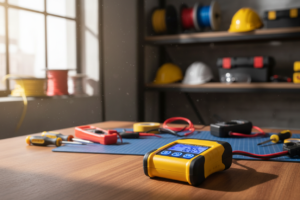
Learn from my expert review of the best electrical detectors designed for safety and efficiency Choose the right tool for your US home or workplace
Product SKU: E310
Product Brand: Klein Tools
Product Currency: USD
Product Price: 44.97
Product In-Stock: InStock
5
Pros
- ✅ Pros
- Ease of Use
- The ET310 requires very little expertise to use competently, making it a great option for homeowners and DIYers who want to take the guesswork out of matching circuit breakers to outlets. Bob Vila
- High Accuracy
- In a test with nine other circuit-breaker finders, the Klein model outperformed them with its ease of use, ability to reliably match circuit breakers to outlets, and useful extras. Bob Vila
- 3-in-1 Functionality
- The ET310 allows you to perform other functions while matching circuit breakers, including testing GFCI outlets and identifying potentially dangerous wiring issues. Specifically, the transmitter functions as a faulty-wiring indicator that identifies reversed wiring, missed grounds, and open hots via a three-LED light code. Bob VilaBob Vila
- Clear Feedback
- The receiver delivers clear visual and audible indications when the correct breaker has been located. Klein Tools
- Compact & Convenient Storage
- The transmitter docks in the receiver for convenient storage as a single item when the tester is not in use. Klein Tools
- Durable Build
- Klein built the circuit breaker finder to withstand a 6.6-foot drop, and it carries a CAT II 120V rating. Pro Tool Reviews
- Battery-Saving Feature
- The tool has a 3-minute auto power-off timer to conserve the onboard battery. Pro Tool Reviews
- No Battery Needed for Transmitter
- It uses one 9V battery in the receiver only — the transmitter does not require a battery. Klein Tools
- Good Value
- The Klein ET310 comes in at around $45, which is competitive given its feature set.
Cons
- ❌ Cons
- No Manual Sensitivity Adjustment
- While most DIYers will appreciate its auto sensitivity, those with more experience may prefer a circuit-breaker finder that allows them to adjust the sensitivity manually. Bob Vila
- Limited to 120V Circuits
- The ET310 only tests circuits up to 120 volts. While this covers the majority of outlets, lights, sockets, and other electrical connections, it won't work with 220-volt outlets that ovens, dryers, and air-conditioning units use. Bob Vila
- Occasional False Positives
- The receiver occasionally flashes red and sounds on what turns out to be ghost voltage. Seasoned pros understand false positives, but it could trip up some DIYers. Pro Tool Reviews
- Accuracy Can Be Inconsistent
- Some users have reported that after following instructions to have the sensor "learn" the electric panel, it indicated the same incorrect breaker on three separate attempts for one receptacle, though it performed correctly on a different circuit. Walmart
- Accessories Sold Separately
- To test bare wires and light sockets, the user will need an optional accessory kit, which adds to the overall cost if you need that functionality. Bob Vila
- Requires the Breaker to Already Be Live
- The transmitter will only send the tracing signal over a live (hot) wire — if the breaker you're looking for is already switched off, you won't be able to use this kit to track it down. Rick's Daily Tips
- Initial Panel Scan is Mandatory
- Don't skip the initial scan of the breaker box — that initial scan is important because that's when the receiver "learns" the panel, making it possible to quickly and accurately detect the desired breaker on the second pass. Skipping this step will hurt accuracy