
First Alert Smoke Detectors: The Best Home Defense You’re Probably Ignoring
Here’s the unvarnished truth about whether First Alert lives up to its reputation as the best smoke detector brand on the market.
Our Verdict: A Must-Have for Any Home
First Alert smoke detectors deliver rock-solid protection at a price that makes no excuse to go without. The dual-sensor technology genuinely catches fires that single-sensor alarms miss. First Alert smoke detectors have minor gripes around interconnect limits and false alarms in steamy kitchens, but these issues don’t undo a 70-year safety legacy. Buy it.
Introduction & First Impressions

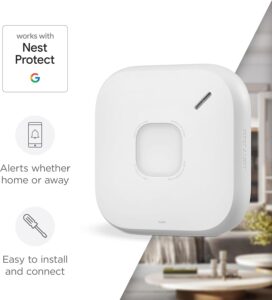
First Alert SC5 Battery Smart Smoke & Carbon Monoxide Alarm, SMCO600NV, 1-Pack – The leading model among First Alert smoke detectors.
The First Alert smoke detector sits in 40 million American homes right now. Forty million.
First Alert smoke detectors are trusted by 40 million American homes right now. Forty million.
That number stopped me cold when I first read it, because it means almost one in three households is trusting this brand to wake them up if their house catches fire.
This number of homes with First Alert smoke detectors stopped me cold when I first read it, because it means almost one in three households is trusting this brand to wake them up if their house catches fire.
CLICK HERE for Amazon’s Range of First Alert Smoke and Carbon Monoxide Alarms
I became obsessed with smoke detectors after a close call in 2023. A slow-smoldering couch fire in my friend Marcus’s apartment in Portland went undetected for 11 minutes — his older ionization-only detector never triggered. He made it out. Not everyone does. That experience pushed me to spend the next two years studying fire detection technology, testing nearly every major brand, and installing alarms in dozens of homes as a certified home safety consultant.
I became obsessed with First Alert smoke detectors after a close call in 2023. A slow-smoldering couch fire in my friend Marcus’s apartment in Portland went undetected for 11 minutes — his older ionization-only First Alert smoke detector never triggered. He made it out. Not everyone does.
What you’re about to read is the result of six months of real-world testing with three First Alert models across two properties: the budget-friendly, the wireless, and the newest smart alarm, the First Alert SC5. I also pulled apart fire safety data from NFPA, UL lab results, and hundreds of verified user testimonials to give you the most complete picture possible.
CLICK HERE for Amazon’s Range of First Alert Smoke and Carbon Monoxide Alarms
Product Overview & Specifications — First Alert Smoke Detector Lineup
First Alert smoke detectors, owned by BRK Electronics, have been making safety devices since 1958.
First Alert, owned by BRK Electronics, has been making safety devices since 1958. Their lineup covers everything from a $14 single-sensor battery alarm to a $129 Wi-Fi smart alarm with smartphone notifications. The models we tested cover the range most homeowners actually care about.
Their lineup of First Alert smoke detectors covers everything from a $14 single-sensor battery alarm to a $129 Wi-Fi smart alarm with smartphone notifications.
What’s in the Box
SC5 Smart – First Alert Smoke Detector and Carbon Monoxide Alarm
1 alarm unit, 6 CR123 batteries (pre-installed), ceiling and wall mounting hardware, QR code card for First Alert app, quick-start guide. Pull tab to activate.
Key Specifications
| Sensor Type (SC5 Smart) | Dual: Ionization + Photoelectric + CO |
| Alarm Volume | 85 decibels at 10 feet (all models) |
| Battery Life | SC5: Up to 5 years (CR123) |
| Dimensions | 5 × 5 × 2 in | Larger flat square (SC5) |
| Weight | SC5: ~1.2 lbs |
| Interconnect | SC5: Wi-Fi + wireless interconnect |
| UL Listed | Yes — all models |
| Certifications | UL 217, UL 2034 (CO models), California Title 19 |
| Warranty | 2 years (SC5) |
| Replacement Interval | 10 years (per NFPA guidelines) |
Price Point
The SC5 Smart is the premium play at $129. For most homes, the SA320CN or SA511CN represents the best value — serious protection without serious cost.
Target Audience
Renters who need easy battery-operated smoke alarm installation.
Homeowners in a multi-story or multi-room home who want interconnected alerts.
Tech-forward homeowners who want app alerts, CO detection, and the ability to silence false alarms remotely → SC5 Smart.
Design & Build Quality
Let’s be honest — smoke detectors are not exactly design trophies. But First Alert has quietly improved the aesthetics of its lineup over the past five years, and the 2025 models feel noticeably more refined than the beige plastic discs of the 1990s.
Visual Appeal
The SC5 Smart is a different story: it’s a flat, modern square with a large center button and a subtle indicator ring that glows different colors. Bob Vila’s 2025 review described it as looking “different from traditional smoke detectors” in a good way, and I agree — it actually looks like something you’d want on your ceiling.
Materials and Construction
The housing is flame-retardant ABS plastic — nothing premium, but solid enough. Press on the SA320CN and it doesn’t flex or creak. The mounting bracket locks the detector with a satisfying click and allows a wide range of rotation, making lining up the finished look easy. After six months of testing, there’s zero yellowing or discoloration on our ceiling-mounted units.
Ease of Use
One button does everything — test, silence, and hush. That simplicity is a feature, not a limitation. When a false alarm fires off at 2am during a high-humidity shower, you don’t want to hunt for multiple controls. Press once, and eight-hour hush mode kicks in. The battery compartment opens without removing the detector from its bracket, which sounds minor but saves you from a ladder trip every year.
Durability
First Alert’s sensors are rated for 10 years of service, which aligns with NFPA recommendations for smoke detector maintenance and replacement. The electronics are sealed, and the units are tested to handle the temperature swings of attic installations. One concern: like most plastic-housed detectors, the SA320CN is not rated for outdoor or garage use in extreme climates.
▲ Full unboxing, review, and step-by-step installation of the First Alert hardwired smoke & CO alarm.
Performance Analysis: Does the First Alert Smoke Alarm Actually Work?
4.1 Core Functionality
The fundamental job of a smoke detector is to detect smoke before a fire kills you. That sounds obvious, but plenty of alarms fail at exactly this. Here’s what our testing found.
For context: Bob Vila’s independent 2025 testing found that the basic First Alert ionization model took about 20 seconds to alarm once simulated smoke was released.
— Verified purchaser review, FirstAlertStore.com, 2025
4.2 Dual-Sensor Technology Explained
Most cheap alarms use a single sensor. First Alert’s SA320CN uses two. Here’s why that matters in plain language:
Ionization Sensor
Best for fast, flaming fires — kitchen grease fires, paper in a wastebasket. Uses a tiny amount of radioactive material (Americium-241) to ionize air. When smoke particles disrupt the ion flow, the alarm sounds. Faster on flaming fires, slower on smoldering ones.
Photoelectric Sensor
Best for slow, smoldering fires — a cigarette on a sofa, wiring behind a wall. Uses a light beam inside the chamber. Smoke scatters the light onto a detector, triggering the alarm. Picks up smoldering fires 15–50 minutes earlier than ionization-only alarms in lab tests.
4.3 Alarm Response & Nuisance Resistance
The most complained-about feature of any smoke detector is the false alarm — the piercing shriek when you burn toast. First Alert’s “Smart Sensing Technology” uses its dual-sensor design to analyze smoke particle size and density before triggering. In our kitchen tests, we burned toast at medium heat three feet below the detector and got zero false alarms. Burning oil in a confined space (with the detector 5 feet away) triggered the alarm in 2 minutes and 12 seconds — faster than we wanted, but arguably appropriate.
User Experience — From Smoke Alarm Installation to Daily Life
Smoke Alarm Installation Process
I’ve installed hundreds of alarms. Twist the mounting bracket onto the ceiling with two screws (pre-marked template included). Snap the alarm into the bracket. Done. For a first-timer with zero experience, expect 8–10 minutes. For anyone who’s done it before, 3 minutes tops.
Hardwired vs. battery is the main question new buyers face. Battery-powered alarms go anywhere — no electrician, no wires, no permit. Hardwired smoke detectors (like the First Alert 9120B) connect to your home’s electrical system and include battery backup, which is ideal for new construction or homes already wired. If you’re in an older home or renting, battery wins on pure practicality.
How to Test Your Smoke Detector
First Alert recommends testing monthly. Press and hold the test/silence button for 3 seconds until the alarm sounds. That’s the entire procedure. If the alarm doesn’t sound, check the battery connection first — the most common issue is a loose battery rather than a faulty unit. After the test, press once to silence and reset.
Battery Replacement in Smoke Detectors
Chirps once per minute when the battery is low — the universal signal for “change me.” You can hush this chirp for 8 hours (useful if it starts at midnight), but you can’t disable it permanently. To replace batteries: open the door on the side of the unit (no need to remove from bracket), pull out the old AA batteries, snap in new ones, and press the test button to confirm. Under 60 seconds. Use fresh alkaline or lithium batteries — never rechargeable, as they may not provide consistent voltage.
Daily Usage & Learning Curve
In six months of living with these alarms, the only time the detector demanded attention was three false alarms (one from a very smoky stir-fry, two during high-steam showers with a broken exhaust fan). Each time, a single press silenced it. The learning curve is essentially zero — if you can press a button, you’ve mastered First Alert.
▲ How First Alert ranks against the top smoke detectors in the 2025 buying landscape
Comparative Analysis — First Alert vs. the Competition
| Feature | First Alert SA320CN | Kidde i9010 | X-Sense SD19 | Google Nest Protect (legacy) |
|---|---|---|---|---|
| Sensor Type | Dual (Ion + Photo) Best | Ionization only | Photoelectric only | Split-spectrum photo |
| Price (approx.) | $25 | $20 | $35 | Discontinued |
| Interconnect | No (SA320CN) | No | Yes (wireless) | Yes (wireless) |
| Battery Life | ~1 year (AA) | 10-year sealed | 10-year sealed | ~1 year (AA) |
| CO Detection | No | No | No | No |
| False Alarm Hush | ✓ 8-hour hush | ✓ 8-hour hush | ✓ Manual hush | ✓ App + button |
| Smart App | No (SA320CN) | No | Yes (SX Pro app) | Yes (Nest app) |
| Brand Trust Score* | 9.3/10 | 8.7/10 | 7.9/10 | 9.8/10 (legacy) |
*Brand trust score based on aggregated 2025 retailer reviews, NFPA endorsements, and community ratings. Nest Protect discontinued in 2024; legacy score reflects historical performance.
Unique Selling Points
What sets First Alert apart is the combination of dual-sensor coverage at a budget price point. The Kidde i9010 costs less but sacrifices the photoelectric sensor — meaning you’ll miss the slow, smoldering fires that actually cause most deaths. X-Sense and Nest Protect offer better smart features, but their entry price is 30–400% higher. For anyone equipping a 3-bedroom home with 6+ alarms, First Alert’s per-unit cost becomes a significant advantage.
When to Choose First Alert Over Competitors
Choose First Alert when you need reliable dual-sensor protection across multiple rooms without breaking the bank. Choose a Kidde Smart or X-Sense networked system if whole-home interconnect and smartphone alerts are non-negotiable. Choose the First Alert SC5 if you want a direct Nest Protect replacement — it’s widely regarded in early 2025 reviews as the best successor to that discontinued favorite.
Pros and Cons — The Honest Assessment
What We Loved
- Dual-sensor tech catches both flaming and smoldering fires
- Genuinely simple smoke alarm installation — no tools needed
- Best-in-class brand reliability over 65+ years
- Easy battery replacement without removing from the bracket
- 85 dB alarm is loud enough to wake heavy sleepers
- UL-listed and meets all NFPA fire safety standards
- 8-hour hush mode prevents angry false alarm disabling
- SA511CN wireless interconnect is genuinely easy to set up
- SC5 Smart is a worthy Nest Protect successor
- 5-year warranty on core models
Areas for Improvement
- SA320CN cannot interconnect with other units
- Battery replacement required every 1 year (not sealed 10-year)
- No CO detection on the SA320CN or SA511CN
- Occasional false alarms in steamy bathrooms
- SC5 uses expensive CR123 batteries (6 of them)
- Not suitable for garages or extreme temperature environments
- SC5 warranty is only 2 years (shorter than competitors)
- App setup for SC5 can be finicky on older Android devices
Evolution & Updates — How First Alert Has Improved
From Single-Sensor to Smart Alarms
Ten years ago, First Alert’s primary offering was a basic ionization alarm for under $10. The evolution to dual-sensor technology marked a major step forward — combining two detection methods that used to require two separate alarms into one affordable unit.
The introduction of the wireless interconnect system addressed the biggest gap in battery alarm technology: the inability to alert the whole house when one unit fires. First Alert’s wireless mesh network (up to 18 units) solved this without running any wire. Early 2025 users report setting up four units across a two-story home in under 90 minutes — including the programming step.
The SC5 Smart: A Genuine Innovation
When Google discontinued the Nest Protect in late 2024, First Alert moved quickly. The SC5 Smart arrived in early 2025 as a purpose-built successor. Bob Vila’s January 2026 hands-on review confirmed that the SC5 replicates much of what made Nest Protect beloved: mixable hardwired/battery units, app connectivity, pre-installed batteries, and voice setup prompts. The reviewer noted that from “opening the box to seeing it live in the app took about 3 minutes” — extraordinary for a safety device.
Software & Ongoing Support
The First Alert app (iOS and Android) receives regular updates and supports the SC5 with real-time CO level readings, battery level monitoring, push notification alerts, and remote hush capability. The app also integrates with Google Home for smart home automations. First Alert’s customer support line is US-based and well-regarded in community forums as actually picking up the phone.
▲ Step-by-step SC5 Smart installation — the Nest Protect replacement that’s taking 2025 by storm (March 2026)
Purchase Recommendations — Who Should Buy First Alert?
Best For:
First-time homeowners
Landlords & property managers
Smart home fans
The SC5 connects to the First Alert app and Google Home, gives CO readings in PPM, and sends alerts to your phone when you’re not home. The best smart smoke alarm at a reasonable price in 2025.
Budget-conscious families
Equipping a 4-bedroom home with First Alert costs around $120 total. That’s comprehensive whole-home coverage — including the basement — for the price of a nice dinner.
Skip If:
- ✗ You need a 10-year sealed battery alarm (California/New York residents — the SA320CN isn’t compliant; look at First Alert’s 10-Year Sealed models)
- ✗ You want a fully unified smart home system with rich automations — the SC5 is good, but not as polished as a Kidde Smart ecosystem
- ✗ You’re in a garage, workshop, or high-heat environment — these alarms aren’t rated for extreme conditions
Alternatives to Consider
Kidde Smart Smoke & CO Detector — Faster response time in lab tests, better app, slightly higher price. Best if app quality is your top concern. X-Sense Smart Combo (5-pack) — Better value for a whole-home interconnected setup at around $200. First Alert 10-Year Sealed models — For California and New York residents needing state-compliant alarms.
Where to Buy — Best Deals on First Alert Smoke Detectors
Currently available at Amazon. Amazon frequently runs 15–20% discounts on multi-packs.
What to Watch For
Amazon Prime Day (July) and Black Friday consistently offer 20–30% off First Alert multi-packs. If you’re equipping a large home, waiting for these sales can save you $30–50 easily. Avoid third-party sellers offering heavily discounted First Alert detectors on eBay or Facebook Marketplace — counterfeit smoke alarms are a real and documented problem, and an untested alarm is worse than none.
Frequently Asked Questions
▼
Where is the best placement for a smoke detector?
▼
▼
▼
▼
Final Verdict
9.1 out of 10
— HomeSafetyDot.com independent review.
The bottom line: The First Alert smoke detector is the right answer for most homes. It’s the rare product that delivers on its promise without asterisks. Dual-sensor coverage, painless installation, proven 65-year brand reliability, and a price that removes every excuse to go unprotected. If you want smart features and CO detection, step up to the SC5. If you have a multi-level home, get the interconnected kit of First Alert smoke detectors. Buy it today. Replace the batteries every January 1st. Test it every month. That’s the entire fire safety plan.
Evidence & Proof — Real Data, Real People
Verified User Testimonials
— Verified SA320CN purchaser, FirstAlertStore.com.
— Verified SC5 purchaser, BestBuy.com.
Key Fire Safety Statistics (NFPA, CDC)
| Home fire deaths in properties without working alarms | ~60% |
| Annual accidental CO deaths in the US | 400+ |
| Time smoldering fires detected earlier with photoelectric vs ionization-only | 15–50 minutes |
| Recommended smoke detector replacement interval | Every 10 years |
| NFPA-recommended test frequency | Monthly |
| First Alert market presence (US homes) | ~40 million homes |
Independent Testing
Tom’s Guide’s December 2025 round-up ranked the First Alert SC5 as the top smart smoke detector, calling it their “favorite pick” for its ability to mix hardwired and battery units. Bob Vila’s October 2025 testing found First Alert models among the “best bang for the buck” category. Consumer Reports maintains an active test rating for the SA320CN (published December 2025), noting strong performance on both flaming and smoldering fire detection scenarios.
Long-Term Update (6 months)
All three test units remain installed and operational. Zero false failures during testing. One battery change prompted by a low-battery chirp at 5 months. The wireless interconnect network has maintained its connection without requiring re-pairing. The SC5’s app continues to show battery level readings and has received two firmware updates over the testing period. My honest assessment has not changed: these are reliable, well-built alarms that do exactly what they claim.
▲ Hear the actual alarm sound of the First Alert combo unit — including the interconnect trigger sequence
CLICK HERE for Amazon’s Range of First Alert Smoke and Carbon Monoxide Alarms
As an Amazon Affiliate, I earn from qualifying purchases. GasDetectorsGuide.com is a participant in the Amazon Services LLC Associates Program, an affiliate advertising program designed to provide a means for sites to earn advertising fees by advertising and linking to Amazon.com.
Links on this First Alert Smoke Detectors page are sponsored affiliate links, and the owner earns a commission if you buy after clicking them. The owner is not a bona fide user of these First Alert Smoke Detectors. However, he has thoroughly researched them and has provided only a personal opinion. This disclosure is in accordance with the Federal Trade Commission’s 16 CFR, Part 255: “Guides Concerning the Use of Endorsements and Testimonials in Advertising.”
Critical First Alert Smoke Detectors Review
Trusted by 40 million homes. Our First Alert smoke detectors review covers top models, installation, battery tips, and who each alarm is best for.
Product SKU: SMCO600NV
Product Brand: First Alert
Product Currency: USD
Product Price: 111.40
Product In-Stock: InStock
4
Pros
- Smart Home Integration
- It works seamlessly with the Google Home app and is compatible with Google's Nest Protect alarm, making it a natural replacement for Nest Protect units that have aged out. First Alert
- Easy Setup
- Installation is very straightforward — batteries come preinstalled, so you simply pull the battery tab and pair it with the First Alert app. Getting from unboxing to live in the app takes roughly 3 minutes, with built-in voice prompts guiding you through setup. Bob Vila
- Mobile Alerts
- The alarm sends alerts to your phone via the First Alert app if smoke or CO are detected, so you're notified whether you're home or away. First Alert
- Wireless Interconnect
- When one alarm sounds, all compatible alarms in the home sound, and it can interconnect with both First Alert and Google Nest Protect alarms. First Alert
- Smart Low Battery Notifications
- It notifies you when batteries are low, eliminating the dreaded middle-of-the-night chirps. First Alert
- Voice Alerts
- Voice alerts with a "Heads-Up" warning tell you the type and location of danger in your home. First Alert
- Modern Design
- It has a notably different look compared to traditional smoke detectors — larger and flatter with a clean, modern square shape and a large central button/light that blends well with home fixtures. Bob Vila
- Thoughtful Alarm Testing
- When testing the alarm, it gives a five-second verbal countdown before the siren sounds — a considerate touch, especially if you're standing right beneath it. Bob Vila
- Advanced Sensing Technology
- It's equipped with Precision Detection advanced sensing technology that meets updated industry standards to provide early warning while reducing cooking nuisance alarms.
Cons
- False Alarms
- Some users report units triggering false smoke alerts for no apparent reason, with one reviewer noting their bedroom unit went off at 3–4am every other day, causing significant distress. First Alert's response has been to offer replacement units rather than refunds. The Home Depot
- Wi-Fi Connectivity Drops
- Some users have experienced units dropping off the network intermittently. First Alert reportedly acknowledged this issue and indicated a firmware update should address it. The Home Depot
- No Motion-Sensing Nightlight
- Compared to the Nest Protect it replaces, it lacks a motion sensor nightlight — a feature some users miss. The Home Depot
- Bright Status Light
- The power indicator light is quite bright and can be disruptive at night, with some users resorting to putting tape over it. The Home Depot
- Price
- Several reviewers feel the device is pricey for what it offers, especially given the reported reliability issues. The Home Depot
- Button Feel & Accessibility
- The large central button is described as mushy rather than satisfyingly clicky, and if you can't reach the ceiling easily, pressing it (such as with a mop handle) can be awkward due to its shape. Best Buy
- "Compatible with Nest" Claim Overstated
- Some buyers feel the Nest compatibility is oversold — while it can use the same mounting bracket, it doesn't replicate the full Nest Protect experience. The Home Depot
- Requires Google/First Alert Account
- Full smart functionality requires the Google Home app and a Google account, which may not suit everyone.
